
We’re always right when we’re managing risk.
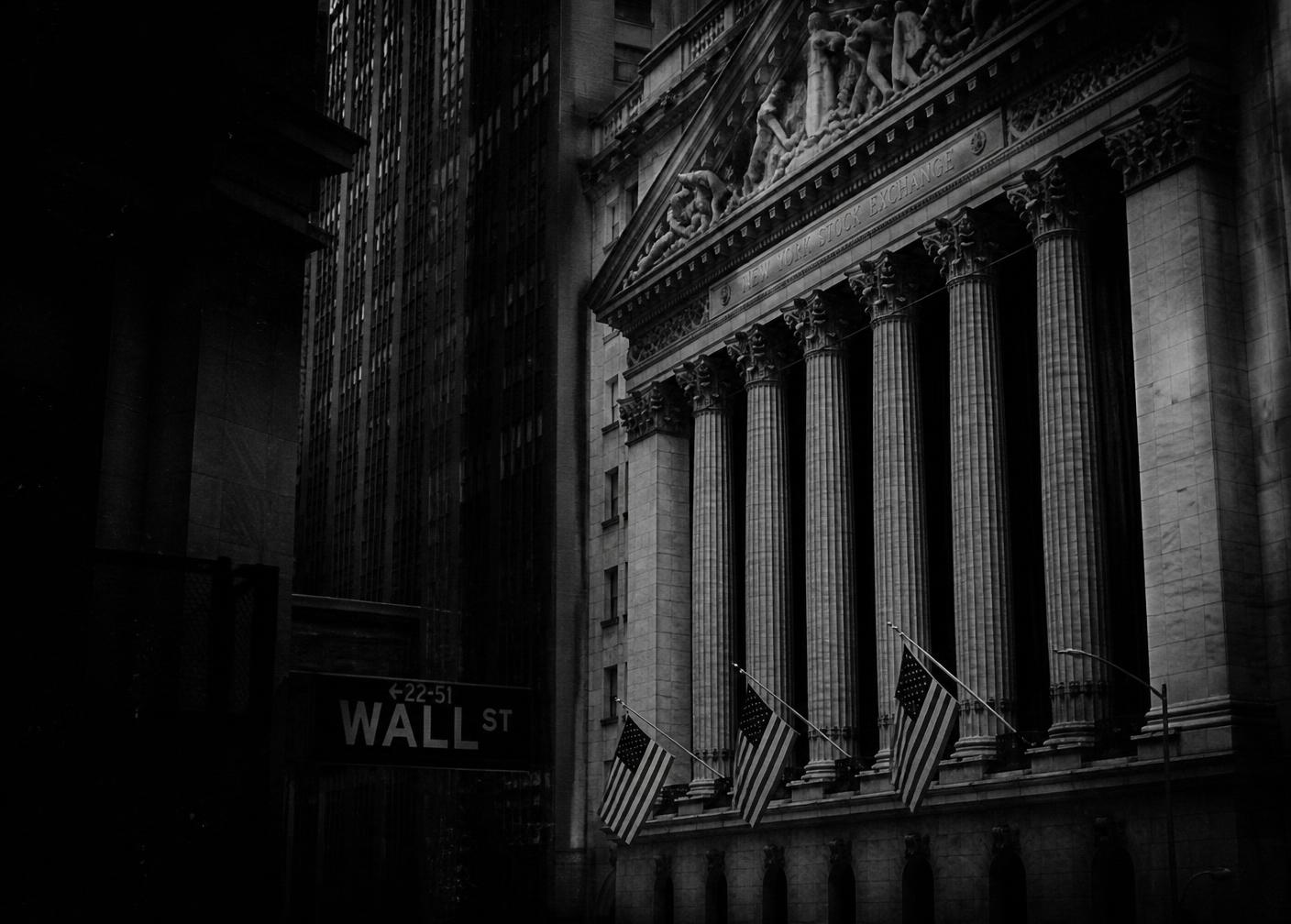
My relationship with the markets started while I was still studying business finance with a focus on statistics. While many of the people around me were preparing for traditional careers in banking and finance, I was sitting in class trading penny stocks — sometimes getting myself in trouble with my instructors because I was more interested in what was happening in the market than what was happening in the classroom.
I was obsessed with trading. After college, I moved to Toronto and pursued it seriously. I took trading programs. I studied different methodologies. I eventually found myself trading from a trading desk in Toronto.
And I lost my money. I simply wasn’t as good as I thought I was. That experience eventually taught me one of the most important lessons of my trading career: wanting to be a trader and having a repeatable trading process are two completely different things.
Passion wasn’t enough. Market knowledge wasn’t enough. A few winning trades weren’t enough. I needed a system.
I became a Director of Business Development for a quantitative trading software company in Calgary developing technology for NinjaTrader. That exposed me to a completely different side of the industry: software developers, system developers, algorithmic programmers, trading strategies, indicators, automation, backtesting, quantitative research, data, risk, and hundreds of traders and trading businesses trying to solve many of the same problems in completely different ways.
I started building software for myself. One application became five. Five became twenty. And eventually, what started as building tools to solve my own trading problems became a software development company.
Over the years, I have been involved in building hundreds of trading applications across major global trading platforms, including Tickblaze, NinjaTrader, TradingView, Rithmic, and other financial technology environments. That eventually expanded far beyond individual applications — into trading platforms, proprietary trading infrastructure, risk-management technology, market-data infrastructure, quantitative testing tools, algorithmic trading systems, execution technology, and software used by both individual traders and professional financial firms.
That experience fundamentally changed the way I see the market.
I don’t start with the trade. I start with the data.
A lot of discretionary trading begins with an opinion: I think the market is going higher. My process starts somewhere else: Can I prove there is an edge here?
My background in statistics and systems architecture trained me to think in hypotheses rather than predictions. If I believe a market behaves a certain way under certain conditions, I want to test it. Define the conditions. Collect the data. Build the logic. Test the hypothesis. Measure the outcomes. Understand the distribution of wins and losses. Identify the drawdowns. Understand the risk. Determine whether the edge survives across enough observations to deserve capital.
Only then am I interested in execution. That doesn’t mean everything I trade needs to be automated. I’m both a discretionary and systematic trader. I can use software, quantitative testing and automated systems to develop and validate an idea — and then determine whether the best way to execute that edge is algorithmically or discretionarily. Technology doesn’t have to replace the trader. It can make the trader better informed.
- Hundreds of trading applications across global platforms
- Algorithmic trading strategies
- Execution systems
- Trader workflow and decision-support technology
- Indicators and technical analysis tools
- Quantitative research and backtesting tools
- Risk-management applications and infrastructure
- Proprietary trading technology
- Discretionary trading systems
- Portfolio and strategy testing infrastructure
- Market-data infrastructure
- Technology for individual traders, professional firms, brokers, and institutional participants
I’ve worked with developers, system programmers, traders, trading businesses, platforms, brokers, exchanges, proprietary trading firms, and institutional firms. But whether I’m looking at a single indicator or an entire trading platform, the objective is ultimately the same:
make better decisions with better information.
My trading career didn’t develop around one asset class or one way of trading. I started in equities. From there, I moved heavily into options, where the leverage and different ways of structuring risk appealed to me. Eventually, I moved into futures. Futures gave me much of what I was looking for: leverage, liquidity, straightforward market access, and a level of simplicity that fit the way I wanted to trade.
I’ve also traded markets such as crypto and CFDs. They’re legitimate markets with their own advantages, but they aren’t where I personally choose to focus most of my trading today. My primary focus is futures.
I’ve traded personal cash accounts, proprietary trading accounts, and significant account sizes. By temperament, I’m predominantly a day trader and short-term trader. I like being able to identify an opportunity, define the risk, execute the trade and get out. I generally don’t want unnecessary overnight exposure. I’ve also done well with swing trading and longer-duration approaches.
The timeframe can change. The instrument can change. The underlying process doesn’t.
01
02
03
This is one of the most important principles in my trading. It doesn’t mean every trade will be right. It means I don’t believe our job is to know exactly what happens next. Our job is to understand what we’re willing to risk before we participate.
A losing trade executed according to a validated process can be a good trade. A winning trade that violated every rule can be a terrible trade. That’s one of the hardest distinctions for developing traders to understand.
The outcome of one trade doesn’t validate the decision that created it. Probability plays out across a series of trades. That’s why survival matters. Protect the capital. Protect the account. Protect your ability to take the next qualified opportunity. Stay in the game long enough for your edge to matter.
Charts are easy to explain after the fact. Anyone can pull up yesterday’s chart and point to where someone should have bought and where someone should have sold. That’s not trading.
Real trading happens on the right side of the chart. You don’t know what happens next. Decisions have to be made with incomplete information. Risk has to be defined before the outcome is known. Trades lose. Setups fail. Conditions change. Sometimes the best trade is no trade at all.
That’s why I’m a major believer in live-market education. If someone is teaching you how to trade, I believe you should eventually be able to watch that person break down markets in real time. You should be able to see the process when things work — and you should be able to see the process when they don’t.
That’s why livestreaming is an important part of what I do. I break down what I’m seeing, what I’m looking for, where the risk is, why I’m considering a trade, why I’m avoiding a trade, and how I approach the decision-making process while the market is actually moving.
You don’t need to trade exactly like me. My style may not fit your personality at all. That’s okay. Not every trader is meant for every teacher. Find your tribe. Find people whose philosophy resonates with you. Find a process you can understand, test and believe in. And be careful who you give your attention to. Not every influencer, educator or course provider is created equal.
I’m rough around the edges sometimes. That’s part of who I am. If I think something is broken, I’ll say it’s broken. If you’re blaming psychology but your strategy has no measurable edge, I’ll tell you. If you’re strategy hopping, overleveraging, revenge trading, gambling, constantly changing indicators, or trying to force the market to pay you, another trading course isn’t necessarily going to fix the problem.
I’ve made plenty of those mistakes myself. I would rather tell a trader what I believe they need to hear than tell them what makes them feel good. Because the objective isn’t to look like a trader. It’s to build the process required to become one.
I regularly share market analysis, trading education, strategy breakdowns, live trading sessions, and educational content through my YouTube channel and other media. You can watch me break down markets in real time, see the setups I’m looking for, understand how I think about direction and probability, watch how I define risk, see how I handle winning and losing trades, and learn how I apply a systematic framework while the market is actually moving.
If my approach resonates with you, start here.
- Structured online education
- One-on-one coaching
- Strategy development
- Risk-management frameworks
- Live trading classrooms
- Discretionary trading education
- Trading software and technology
- A community of traders working through the same process
- Experienced trading instructors
- Algorithmic and quantitative trading education
- Backtesting and research tools
Alpha Capital Syndicate (ACS) is a copy-trading and managed-account solution for professionals, entrepreneurs, and high-net-worth individuals who want access to curated trading strategies across equities and futures without managing the trades themselves.
The strategies available through ACS have years of live and simulated performance history. The infrastructure connects to many of the major trading platforms and brokers, allowing qualified accounts to follow professional traders in a transparent, rules-based environment.
This is not a course. This is not a chat room. This is a done-with-you and done-for-you capital deployment solution for people who would rather have their money working through proven systems than spend years learning to trade on their own.
- Copy-trading infrastructure for equities and futures
- Connects to major brokers and platforms
- For passive income and wealth preservation
- Professional traders with verified track records
- Curated, rules-based strategies
- Guided onboarding and account support
That obsession eventually took me from a trading desk to software development, systems architecture, trading platforms, proprietary trading, risk technology, market data, quantitative research, and building companies throughout the financial trading industry. I’ve won. I’ve lost. I’ve built systems that worked. I’ve built systems that didn’t. I’ve tested thousands of ideas.
And I’ve learned that trading isn’t about finding a way to be right all the time. It’s about developing a process that allows you to be wrong without destroying your ability to continue.